










What your coffee choice says about the planet (and why specialty coffee is part of the answer)

Coffee is one of the most widely consumed beverages on earth. It is also one of the most environmentally complex. Between the farms where it grows, the supply chains that move it, and the pods and cups it ends up in, coffee touches almost every category of environmental concern: deforestation, water use, soil health, carbon emissions, and packaging waste.
Earth Day feels like the right moment to be honest about that — and to talk about what choosing differently actually means.
The coffee industry's real environmental footprint
Around 2 billion cups of coffee are consumed every day worldwide. Behind that number is a chain of production that, in its conventional form, carries a significant environmental cost.
Coffee farming is responsible for meaningful contributions to tropical deforestation. To meet growing demand, farmers in regions like Brazil, Vietnam, and Central Africa have historically cleared forest land for sun-grown monocrop plantations. Coffee consumption has grown by more than 60% since 1990 Canyoncoffeeroasters and demand is still rising, which places continuous pressure on some of the world's most ecologically sensitive land.
Water is another pressure point. The global average water footprint of a 125ml cup of coffee is approximately 140 litres International Coffee Organization — most of that consumed at the farm level. Wet-milling processes used in many producing regions discharge organic pollutants into local waterways, causing damage to aquatic ecosystems and threatening community water supplies.
At the consumer end, the numbers are equally stark. Americans dispose of approximately 50 billion coffee cups each year. Sustainablebusinesstoolkit The majority of those cups are lined with polyethylene — a plastic derivative that makes them unrecyclable. Single-use pods have added a further layer of packaging waste to an already strained system.
None of this means that coffee is straightforwardly bad for the planet. Coffee trees sequester carbon, support biodiversity when grown well, and sustain the livelihoods of an estimated 125 million people worldwide. But the conventional commodity model — the one that produces the cheapest coffee at the highest volume — extracts far more than it gives back.
Why specialty coffee is a different proposition
The specialty coffee industry was not built primarily around sustainability. It was built around quality. But the two are more connected than they might appear.
Specialty coffee, by definition, requires traceability. A Q-graded lot with a score above 80 cannot be anonymous. The buyer has to know which farm it came from, which harvest, which processing method. That level of transparency is the foundation on which better sourcing relationships are built.
Direct trade bypasses the multiple intermediaries of the traditional market, so a larger share of the profit goes directly to the producers. Sustainable coffee farming often results in higher quality, specialty-grade beans, which command a price premium that is passed on to the farmers. Compass Coffee For smallholder farmers — who grow roughly 80% of the world's coffee on plots of 12 acres or less — that price differential is not a rounding error. It is the difference between sustainable farming practice and survival-mode cost-cutting.
The environmental implications follow. When a farmer receives a premium for quality, they have less incentive to clear more land or use cheap inputs to inflate yield. The economics of specialty push toward practices that protect the asset: shade-grown cultivation, better soil management, water recycling, and the long-term care of trees that can produce exceptional fruit for decades.
Specialty coffee brands, guided by the Specialty Coffee Association, lead in ethical sourcing practices, essential in addressing the impacts of climate change on coffee production. Homebrew Academy This is not virtue signalling. It is structural. Specialty coffee's supply chain depends on the same growing conditions that climate change threatens most acutely. The farmers producing the best high-altitude Ethiopians or Guatemalan naturals are on the sharpest edge of temperature shifts and precipitation volatility. Supporting them well is not separate from caring about climate — it is the same thing.
Choosing specialty coffee is not a perfect solution to the coffee industry's environmental challenges. But it is a meaningful one. It redirects money toward farmers who are incentivised to farm better, toward roasters who have to know their supply chain well enough to describe it honestly, and toward a system that treats coffee as something worth protecting rather than something to be extracted at minimum cost.
How xBloom approaches sustainability
xBloom was built by engineers who came from Apple, and that background shows in how the problem gets framed. Every design decision has a brief. Every component choice is justified. That discipline extends to sustainability.
"We believe great design is rooted in value, innovation, functional intelligence, and the commitment to sustainability. Climate change affects many of the coffee-producing regions more than it does for many of us drinking their beans. We are dedicated to continuously improving and protecting our partners around the world."
— Richard Xu, Co-founder and CEO, xBloom
That commitment shows up in two concrete places: how xBloom selects its roaster partners, and what the xPod is actually made of.
Roaster selection as a sustainability filter
xBloom does not take on roaster partners casually. The selection criteria are explicit: quality commitment, sustainability, community empowerment, and transparency. These are not checkbox items. They are the filter through which every partner relationship is evaluated before the first xPod is ever filled.
"Verve is driving positive change in the world of coffee: from the farms they source to the communities they serve locally. It's inspiring, and I hope we can elevate their efforts further through this collaboration."
— Richard Xu on xBloom's roaster partnership with Verve Coffee
That philosophy scales across every roaster in the xPod ecosystem. When you brew an xPod, the coffee inside came from a roaster who passed that filter. The recipe encoded in the NFC card was developed by people who can account for every step between the farm and your cup.
Explore xBloom's roaster partners

The xPod: starting from waste
The more technically interesting sustainability story is the xPod itself, and it starts with a question most packaging designers never think to ask: what material already exists as a byproduct, would otherwise go to waste, and happens to have exactly the structural properties we need?
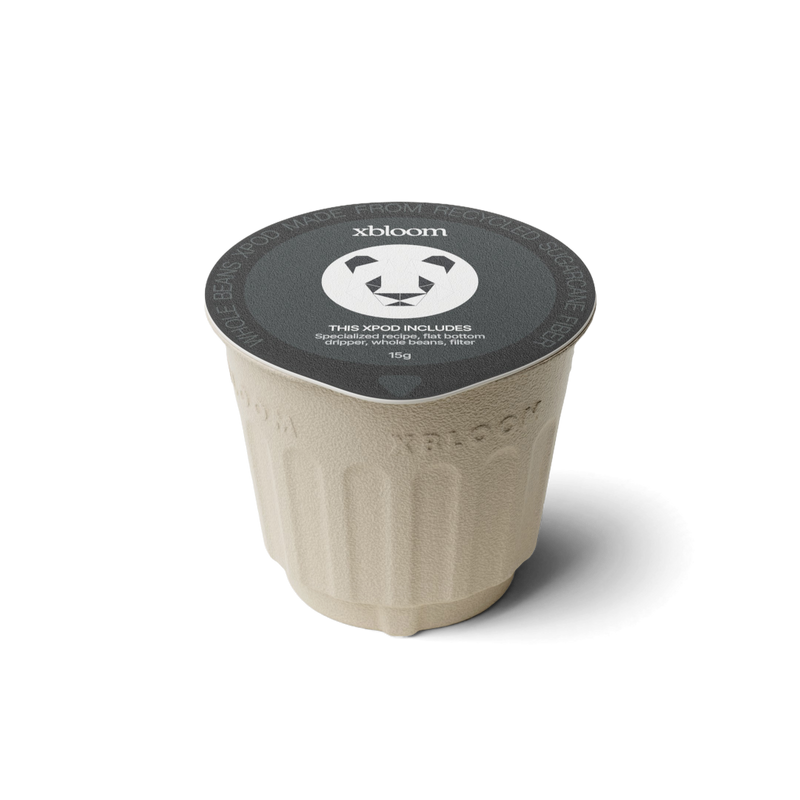
The answer xBloom landed on is sugarcane bagasse and bamboo fibre — two agricultural materials chosen not because they photograph well in a sustainability deck, but because they are functionally right for the job.
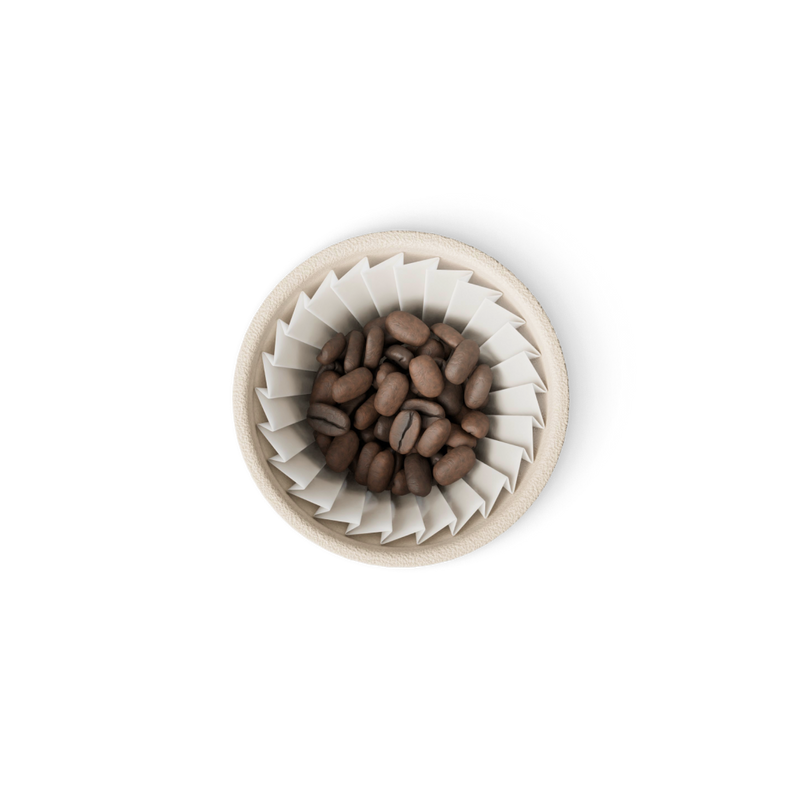
Bagasse is the dry fibrous pulp left after juice is extracted from sugarcane during sugar production. Historically it was burned as fuel or discarded entirely. It is, in other words, a waste product from an industry that already exists — requiring no additional agricultural land, no additional water, and no additional carbon cost to produce. Forming it into xBloom's flat-bottom dripper converts that waste into something precise: a brewing component that is durable, immune to boiling water temperatures, and compostable within 30 days after use.
Bamboo fibre follows the same logic. Bamboo is among the fastest-regenerating plants on earth, reaching full maturity in three to five years, requiring no replanting, and regrowth from its own root system after harvest. No pesticides, no replanting cycles, no monoculture pressure.
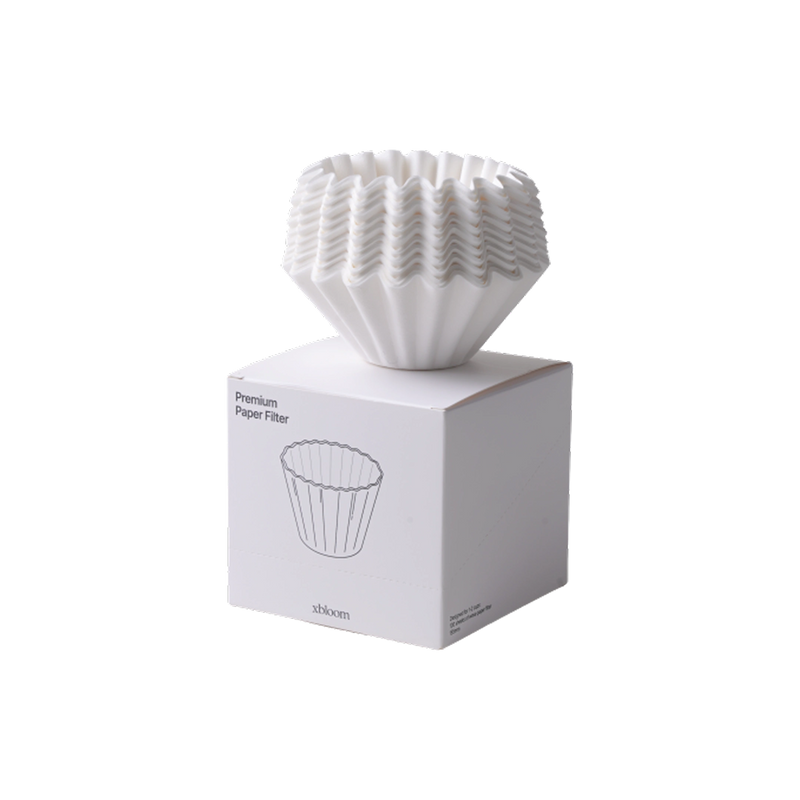
Both materials are combined to form the xPod dripper and filter. Both are home compostable after use. After brewing, the spent dripper and coffee grounds can go directly into a home compost bin, where the structure breaks down within weeks and returns to soil as nutrient-rich organic material — nitrogen, potassium, phosphorus, and calcium. That lifecycle — from agricultural byproduct, to precision brewing component, to compost — is what a genuinely circular material story looks like.

A quieter decision: fewer tags per box
There is a less visible sustainability decision worth noting. When xBloom first launched, each individual xPod carried its own NFC tag to communicate the roaster's recipe to the machine. In 2023, that changed: a single recipe card per bag replaced the per-pod tags.
It is a small change with a real logic. The NFC tag is not the compostable part. Reducing the number of tags per box — from one per pod to one per bag — reduces the material that does not break down. It is the kind of decision that does not make headlines but reflects how the product is actually being thought about over time.
After your brew: the xPod as planter
One detail worth passing on: xBloom actively encourages customers to repurpose used xPods as seed starters or as part of a grow-at-home initiative. The dripper's flat-bottom form and sturdy structure make it a natural planting vessel. The spent coffee grounds inside are nitrogen-rich material that supports germination. It is not a sustainability claim — it is a practical suggestion worth taking seriously if you have a windowsill and any interest in what grows in your kitchen.
Beyond coffee: loose leaf tea and the habit of brewing with intention
xBloom is not only a bean-to-cup pourover machine. The precision water heating system dispenses at exact temperatures for loose leaf tea — which means the same machine that brews your morning pour over can replace a separate kettle for an afternoon white tea, oolong, or green. Brewing loose leaf is not a sustainability statement on its own. But it is a quieter form of the same logic that runs through everything here: choosing the whole ingredient over the disposable format, and letting the machine handle the precision so the habit is easy to keep. One less disposable bag per cup adds up across a year in the same small, consistent way that choosing specialty coffee over commodity coffee does.
Where we are honest about what we have not solved
Sustainability is a direction, not a destination, and it would be dishonest to present xBloom's approach as complete.
The xPod dripper and filter are compostable. Not every element of the packaging is, and we are continuing to work on that. There is no take-back programme for xPods at this time. The xPod system, like any pod-based brewing format, generates more per-cup packaging than brewing with loose beans and a reusable dripper — which xBloom also supports fully through the Omni Dripper and open brewing mode, and which remains the lowest-footprint way to use the machine.
The honest position is this: if you use the Omni Dripper with beans from a specialty roaster who farms transparently, that is the most sustainable way to use xBloom. The xPod system is a thoughtful design within the pod category — better materials, better sourcing, fewer unnecessary components — but it is still a pod system, and pods carry a footprint. We are building toward better.
What Earth Day actually calls for
Sustainability in coffee does not require grand gestures. It requires consistent choices applied at scale.
Choosing specialty coffee over commodity coffee redirects money toward farmers who have a stake in farming well. Choosing an automatic pour over coffee maker that uses those beans with precision — adjusting grind, temperature, and pour pattern specifically for each origin — means less waste in the cup and more respect for what went into producing it.
"Our goal is to remove the barrier to specialty coffee and bring better quality beans to households everywhere. By partnering with leading coffee roasters, we will give our customers the best cup of coffee they've ever had."
— Richard Xu, Co-founder and CEO, xBloom
That mission and the sustainability mission are the same mission. Better coffee, traced honestly, shared fairly, brewed carefully. Earth Day or any other day.
Frequently asked questions
Is specialty coffee better for the environment than regular coffee?
Generally, yes — though it depends on the specific roaster and sourcing practices. Specialty coffee requires traceability by definition, which means roasters have to know and account for their supply chains. That transparency tends to push toward better farming practices, fairer farmer compensation, and less pressure to clear land or cut corners on inputs. It is not a guarantee, but it is a structural advantage over the anonymous commodity market.
Are xPods compostable?
The xPod dripper and filter paper are home compostable. They are made from sugarcane bagasse and bamboo fibre — both agricultural byproducts that break down within weeks in a home compost bin. After brewing, the spent dripper and coffee grounds can go directly into compost together.
What is a bean-to-cup pourover system?
A bean-to-cup pourover is a machine that takes whole coffee beans and produces a finished pour over cup with no manual steps in between — grinding, temperature control, and the pour pattern are all handled by the machine. xBloom is currently the only consumer-facing product that delivers the full bean-to-cup journey through the pour over method, combining an integrated conical burr grinder with precision water heating and kinematic pour technology.
What is the most sustainable way to use xBloom?
Using the Omni Dripper with loose beans from a specialty roaster is the lowest-footprint way to use the machine. The Omni Dripper is reusable and requires no pod at all. The xPod system uses compostable materials and is a thoughtful design within the pod category, but open brewing with your own beans generates the least packaging per cup.
Can I use xBloom for tea?
Yes. xBloom's precision water heating system dispenses at exact temperatures, making it well suited for loose leaf tea — white teas, oolongs, greens, and others each require different water temperatures for optimal extraction. No tea bags, no separate kettle needed.


